Chronic kidney disease (CKD), particularly in patients with diabetes, represents a large and growing unmet medical need, affecting tens of millions of people worldwide and leading to progressive loss of kidney function, cardiovascular complications, and high mortality. In diabetic CKD, persistent high blood sugar damages the endothelial cells that line blood vessels, reducing blood flow, triggering inflammation, and ultimately driving tissue scarring and organ failure. Despite decades of innovation, current therapies primarily slow disease progression rather than repair underlying damage. As a result, many patients continue to decline, often requiring dialysis or transplant. Dialysis replaces only about 10–15% of normal kidney function and carries significant burden, underscoring the lack of therapies that directly restore the damaged microvasculature at the root of disease.
To address this gap, GW researchers have developed a cell‑free regenerative therapeutic platform based on exosomes—small, naturally occurring vesicles—derived from mesenchymal stromal cells (MSCs) in which the p53 gene has been silenced. This modification shifts the cells into a pro‑regenerative state, enabling them to produce exosomes enriched with healing signals. These exosomes, particularly from bone marrow MSCs, act as the therapeutic agent by delivering biological instructions that reduce inflammation, prevent cell death, promote new blood vessel formation, and restore the ability of damaged endothelial cells to repair themselves. Importantly, this activity has been demonstrated under high‑glucose conditions, making it directly relevant to diabetic CKD.
Preclinical findings show that high-glucose environments cause significant damage to vascular cells, while treatment with these engineered exosomes improves cell survival and supports repair. By delivering exosomes instead of live cells, this approach captures the regenerative benefits of stem cell therapy while avoiding key challenges such as variability, complexity, and safety concerns. Overall, this technology represents a next‑generation, off‑the‑shelf biologic platform designed to target the underlying vascular damage in diabetic CKD and enable meaningful tissue repair—not just slow disease progression.
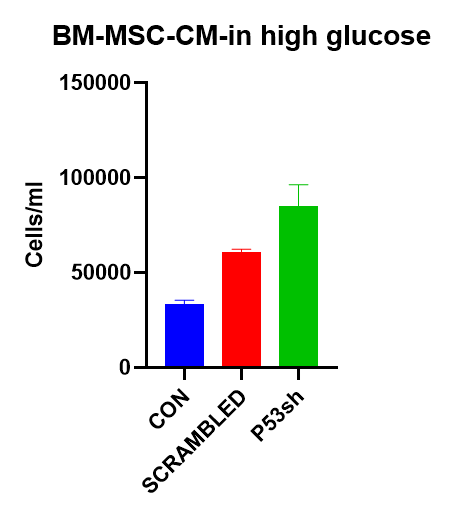
Figure 1. Scratch wound healing assay in HUVECs. Treatment with conditioned media from p53‑silenced bone marrow MSCs significantly enhanced wound closure compared to controls, indicating improved endothelial repair and migration under high‑glucose conditions.
Advantages
- Cell‑free exosome therapy aligned with next‑generation biologics
- Enhanced and tunable potency through p53 pathway engineering
- Off‑the‑shelf product enabling broad patient accessibility
- Scalable and cost‑efficient manufacturing compared to cell therapies
- More consistent and controlled dosing versus live cell approaches
- Reduced safety, handling, and regulatory complexity vs cell therapy
Applications
- Diabetic chronic kidney disease
- Diabetes‑driven vascular complications
- Chronic wound healing
- Peripheral vascular and ischemic diseases
- Cardiometabolic conditions involving microvascular dysfunction
